Multifamily Amenity Design Trends Mirror Boutique Hotels
Recently, multifamily amenity design trends have come to mirror those of boutique hotels. Over the past decade, multifamily amenity design has undergone a major shift. Apartment developers are no longer designing clubhouses as simple gathering rooms or leasing office extensions. Instead, many new developments and renovation projects are embracing hospitality-inspired design to create environments that feel more like boutique hotels than traditional apartment amenities.
For multifamily developers, this approach is not simply about aesthetics. Hospitality-driven design has proven to be one of the most effective ways to elevate resident experience, strengthen leasing appeal, and help apartment communities stand out in competitive markets.
The Evolution of Multifamily Amenity Design Trends
Historically, apartment clubhouse design focused on functionality. A leasing desk, a few sofas, and a television were often enough to satisfy the amenity requirement for many properties.
Today, renter expectations have changed dramatically. Residents increasingly look for environments that feel curated, comfortable, and experience-driven. In response, developers are investing in amenity spaces that mirror the atmosphere and sophistication of boutique hotel environments.
Multifamily lobbies, clubrooms, and lounge areas are now designed to function as social hubs, coworking spaces, and informal gathering areas that residents use daily.
Why Hospitality Design Works in Multifamily Developments
Boutique hotels have long mastered the art of creating memorable environments. Their interiors are intentionally designed to make guests feel relaxed, welcomed, and inspired to spend time in shared spaces.
When these same design principles are applied to apartment amenities, the results can dramatically improve how residents interact with the building.
Hospitality-inspired multifamily design typically incorporates:
• Statement lighting and layered illumination
• Lounge-style seating arrangements
• Rich material palettes and textures
• Curated built-ins and styled shelving
• Comfortable, residential-scale furnishings
These details help transform a clubhouse from a pass-through space into a destination within the building.
Designing a Hotel-Inspired Multifamily Clubhouse
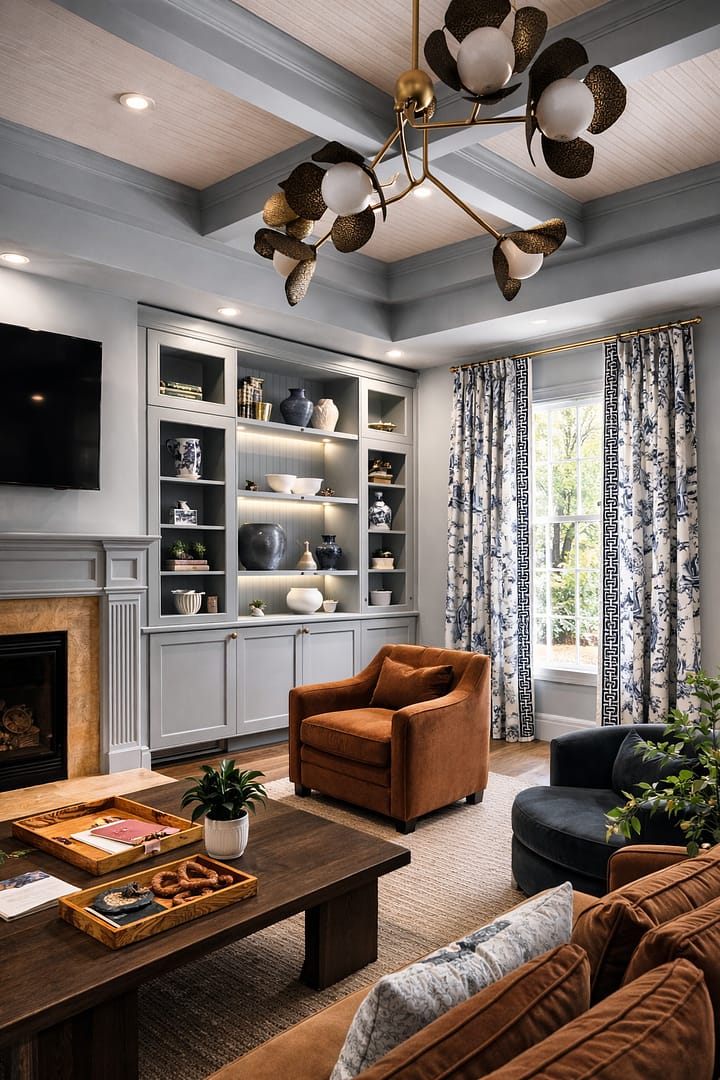
One example of this approach is designing an apartment clubhouse that captures the relaxed elegance of a coastal boutique hotel.
A palette of coastal blues and soft neutrals establishes a calm and welcoming atmosphere. A gold statement chandelier anchors the space overhead, introducing warmth and a sense of sophistication. Copper velvet lounge chairs bring richness and contrast to the color palette while adding a tactile element that encourages residents to settle in.
Natural materials such as rattan accents soften the space and create an organic connection to coastal environments. A custom built-in millwork feature becomes the visual focal point of the room, styled with layered blue and white ceramics, jade green decorative pieces, and curated objects that reinforce the design story.
The overall effect is polished yet relaxed—a clubhouse that feels elevated without being overly formal.
Multifamily Amenities as a Leasing Advantage
For developers and property managers, thoughtfully designed amenity spaces can have a measurable impact on leasing performance.
Hospitality-inspired environments help create a strong first impression during property tours, while also giving residents spaces where they genuinely want to spend time. When a clubhouse feels comfortable, inviting, and visually distinctive, it becomes a powerful marketing asset.
• stronger leasing tours
• enhanced resident satisfaction
• increased resident retention
• stronger differentiation in competitive markets
Multifamily Amenity Design Trends Developers Should Know
As the multifamily industry continues to evolve, the line between residential and hospitality environments will likely become even more blurred.
Developers are increasingly recognizing that design plays a major role in shaping how residents perceive a building. Amenity spaces that feel intentional, elevated, and experience-driven create emotional connections that go far beyond basic functionality.
Hospitality-inspired design is no longer just a trend—it is becoming a defining characteristic of successful multifamily developments.
At Little Black House, our work focuses on designing amenity spaces that blend hospitality aesthetics with the durability and performance required for multifamily environments.
Because when a clubhouse feels like a boutique hotel lobby, it becomes more than just an amenity.
It becomes the heart of the community.
Multifamily Amenity Design: Questions Developers Often Ask
What amenities increase apartment property value?
Well-designed amenity spaces can significantly impact the perceived value of a multifamily property. Spaces that function as social hubs—such as clubrooms, coworking lounges, rooftop terraces, and hospitality-inspired lobbies—often play a key role in attracting residents and supporting rent premiums.
Hospitality-driven environments that feel elevated, comfortable, and thoughtfully designed can also enhance leasing tours and improve overall resident experience.
Why are multifamily developers designing clubhouses like hotels?
Developers are increasingly using hospitality design principles to create amenity spaces that feel welcoming, curated, and experience-driven. Boutique hotel environments are designed to encourage guests to gather, relax, and socialize—qualities that translate well into multifamily amenity spaces.
By incorporating elements such as statement lighting, layered materials, and comfortable lounge seating, apartment clubhouses become spaces residents actively use rather than simply pass through.
What makes a successful multifamily clubhouse design?
Successful clubhouse design balances aesthetics, durability, and functionality. The most effective spaces typically include flexible seating areas, hospitality-style lighting, curated millwork, and materials that can withstand heavy resident use.
Design strategies that combine comfort with visual impact help create environments that support community interaction while also serving as powerful leasing tools.