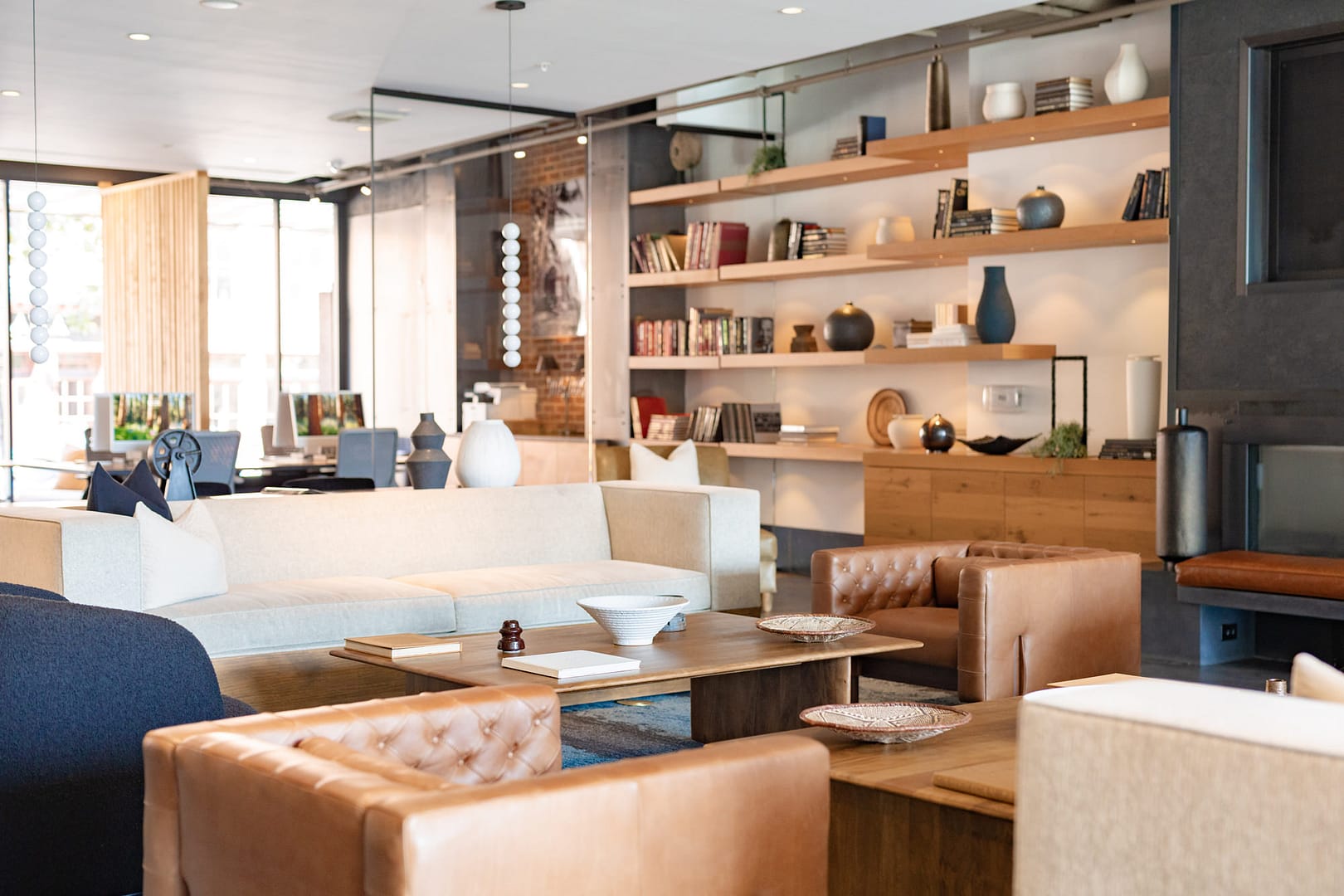
Why Interior Styling Is Essential in Multi-Family & Hospitality Interior Design
I constantly wonder why is interior styling is the most overlooked step in multi-family & hospitality design projects. In multi-family and hospitality interior design, there is a moment that separates a completed project from a finished one.
That moment is interior styling.
Too often, properties invest in architecture, furnishings, lighting, and finishes — yet overlook the final layer that gives a space personality, warmth, and emotional resonance. The result is technically complete, but visually unfinished. Beautiful, but flat. Installed, but not alive.
In luxury residential communities and hospitality environments, styling is not optional. It is essential.
What Is Interior Styling in Multi-Family Design?
Interior styling is the final, intentional layer of a space. It includes curated art, objects, books, greenery, textiles, decorative lighting, and sculptural accents — thoughtfully placed to create balance, scale, and story.
- In amenity space design, styling transforms a lounge into a destination.
- In leasing office design, it shapes first impressions.
- In model units, it influences how prospective residents imagine living there.
Styling is what moves a space from “furnished” to “immersive.”
Why So Many Properties Skip Styling
In many multi-family developments and property repositioning projects, styling is the first thing removed when budgets tighten. It is often viewed as decorative rather than strategic.
But here’s the truth:
Styling is not excess. It is perception.
Without styling, even the most well-designed amenity space can feel cold, under-scaled, or generic. Hard surfaces dominate. Seating feels disconnected. Large volumes of space lack intimacy.
Developers invest in luxury finishes, architectural lighting, and custom millwork — yet without styling, those investments fail to reach their full visual and experiential impact.
Styling Is What Creates Personality
In hospitality interior design, no boutique hotel would open without curated art, layered accessories, and intentional finishing touches. These elements communicate brand identity, mood, and level of service.
The same principle applies to multi-family interior design.
- A thoughtfully styled clubroom signals vibrancy and community.
- A layered rooftop lounge suggests lifestyle and aspiration.
- A carefully composed lobby conveys confidence and distinction.
Styling introduces texture. Contrast. Movement. Narrative.
It makes a space feel lived in — even before anyone lives there.
Styling Influences Leasing & Perception
In competitive real estate markets, perception drives performance.
Prospective residents and guests respond emotionally to spaces. They imagine themselves within them. They take photos. They share experiences.
A styled environment feels complete and considered. It signals care and intention. It elevates perceived value — and perceived value influences leasing velocity and long-term asset positioning.
An unstyled space, no matter how beautifully designed, can feel like a showroom waiting to be finished.
The Final Layer Is Never an Afterthought
At Little Black House, interior styling is integrated into our multi-family and hospitality design process from the beginning. We consider art placement, accessory scale, greenery, and layered textiles as part of the architectural composition — not an afterthought.
Because the final 5% of detail often delivers 50% of the emotional impact.
- Styling is where personality lives.
- It is where warmth enters.
- It is where a property differentiates itself from the one next door.
In amenity-driven environments, that differentiation matters.
Luxury interior design is not just about finishes and furniture. It is about atmosphere. Energy. Experience.
And styling is what brings all of it to life.