Strategic Interior Design Revitalizes Aging Multifamily Assets
Strategic interior design can revitalize aging multifamily properties to increase both rates and resale value. In the highly competitive multifamily real estate market, older multifamily assets face a critical challenge: how to maintain leasing velocity and command premium rents against a surge of new, amenity-rich developments. At Little Black House (LBH), we have partnered with nationally recognized firms like Bozzuto and Greystar to prove that strategic amenity repositioning is not just an aesthetic upgrade—it is a measurable driver of long-term asset value.
Strategic Interior Design for Multifamily Properties
The “Less is More” Philosophy in Amenity Planning
Historically, developers engaged in an “amenity arms race,” packing floor plans with flashy, single-use spaces that often sat empty. Today, the paradigm has shifted. According to recent industry analyses, amenity planning has become an exercise in pragmatism. The goal is no longer to impress on paper, but to measure actual utilization and invest where engagement is strongest.
We advocate for a “less is more” framework that prioritizes everyday functionality over showcase spaces. For instance, transforming an underutilized, oversized business center into a flexible, multi-purpose lounge that supports focused remote work by day and social gatherings by night effectively delivers two uses within a single footprint. This approach prevents owners from overcapitalizing on micro-trends while ensuring the spaces remain relevant across market cycles.
Durable Materials and Lasting Impact
Repositioning an asset requires balancing ambition with fiscal awareness. The emphasis on relevance extends to materiality. Visually heavy interiors that chase short-lived trends date quickly, necessitating premature capital expenditures. Instead, we prioritize cleanability, durability, and timeless sophistication.
“We opt for durable, low-maintenance materials like marble, porcelain, ceramic, or concrete, which elevate the property’s aesthetic while reducing long-term maintenance.”
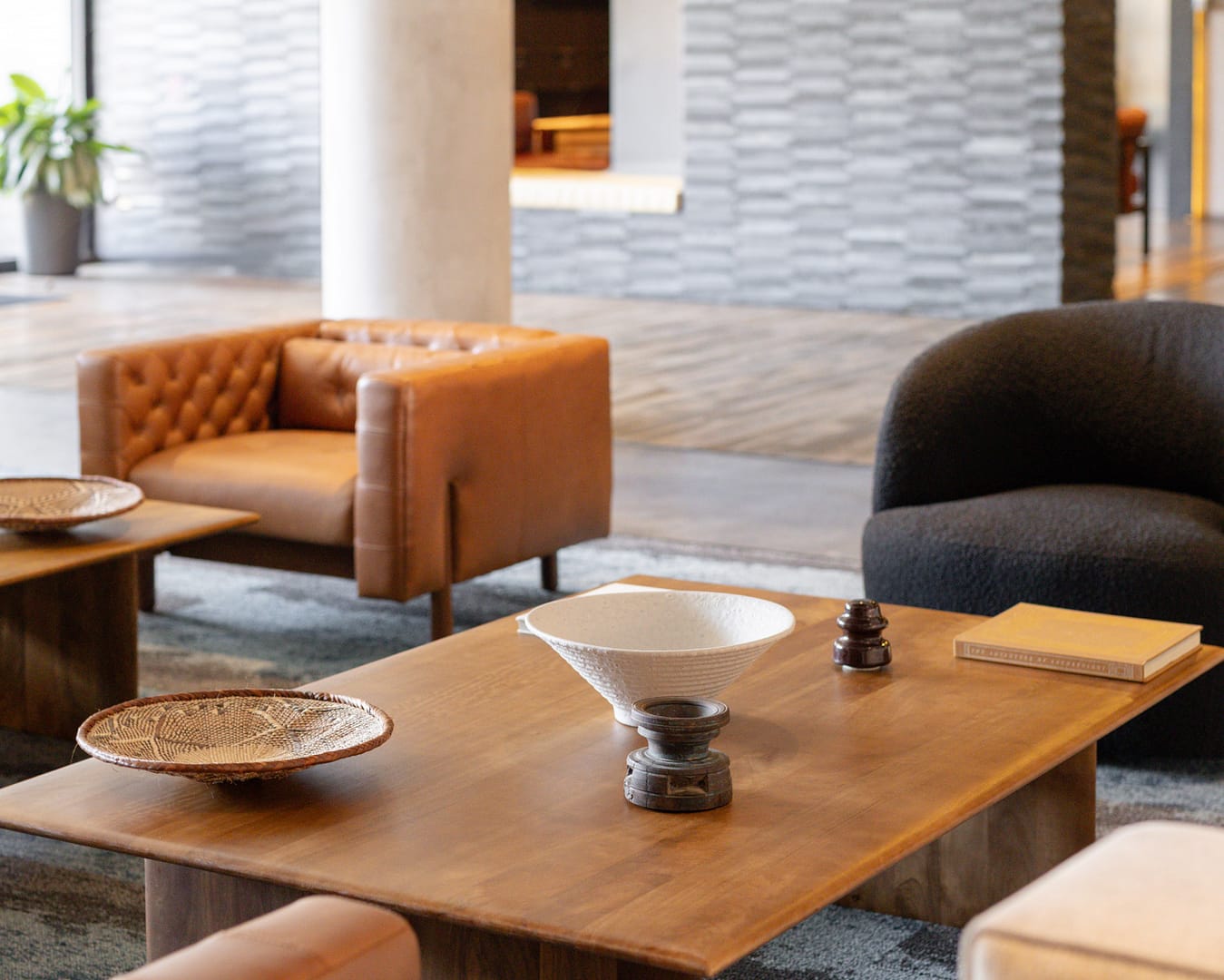
By integrating heritage pieces and tactile textures—such as fluted wood and matte brass—we create environments that feel intentional and lived-in without visual excess. This strategy not only enhances the resident experience but directly impacts the Net Operating Income (NOI) by lowering ongoing operational and maintenance costs.
Translating Brand Vision into Built Experience
Successful repositioning goes deeper than new furniture and finishes; it requires a holistic understanding of the property’s demographic and the developer’s financial objectives. Whether it’s a comprehensive redesign like Union Wharf in Baltimore or a strategic inter design refresh of a suburban garden-style community, LBH aligns brand, budget, and performance objectives to transform dated common areas into cohesive, hospitality-driven environments that resonate with today’s discerning renters.